
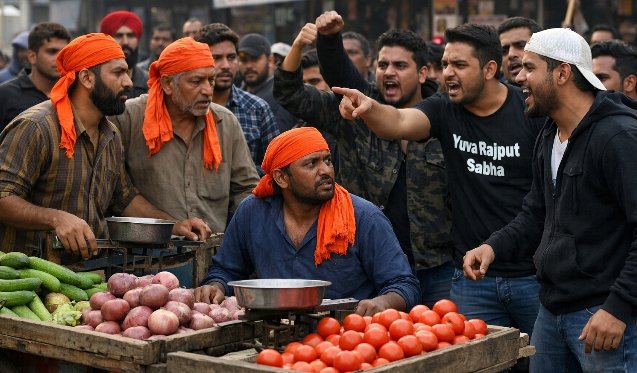
Disturbing trend with serious implications is taking root on the streets of Jammu, where a self-styled brigade of youth led by one Dilawar Singh Manhas claiming links with the Yuva Rajput Sabha has begun confronting and removing cart vendors hailing from other parts of India. What is being projected as “community assertion” concerning unverified regional livelihood, in reality, a brazen overreach into the domain of law—one that risks tearing at the fragile fabric of social harmony. Regulating street vending, verifying documents, and ensuring lawful occupation of public spaces is the exclusive mandate of civic bodies and the district administration. When mob of street urchins assume this role, it sets a perilous precedent. Today it is questioning vendors; tomorrow it could morph into arbitrary enforcement, selective targeting, and mob justice.
Undermining the constitution and co-existence these optics are dangerous and unacceptable. Vendors, many of them poor migrants striving for survival are being singled out, often with an undertone that borders on regional and communal profiling. This mirrors disturbing episodes seen in states like Maharashtra and recently in Himachal Pradesh and Utrakhand where outsiders have been harassed in the name of identity politics. Jammu cannot afford to import such divisive templates. Equally concerning is the silence—or softness—of the administration. The failure to act decisively emboldens fringe elements. Even figures like Manish Sawhney, loosely associated with the Shiv Sena, have in the past indulged in similar theatrics, drawing criticism for injecting communal overtones into civic issues. The pattern is clear: absence of firm action breeds repetition.
Let it be stated without ambiguity—this is not activism; it is outright vigilantism. And vigilantism, if tolerated, inevitably spirals into lawlessness. The administration must act with urgency and firm resolve. Identifying, warning, and, where required, prosecuting those who usurp the law is critical to restoring deterrence. Jammu has long prided itself on coexistence and civic order. Allowing parallel authority structures to thrive will only erode public trust and breed chaos. The message must be unmistakable—governance rests with institutions of the state, not with street-side actors posing as guardians of public interest. Every citizen of India has the constitutional right to work and earn a livelihood with dignity in any part of the country. Those indulging in such acts must realise that the nation’s strength lies in shared opportunity and mutual coexistence, not exclusion. Targeting individuals on the basis of regional identity is a dangerous and divisive agenda and this evil must be nipped in the bud.