
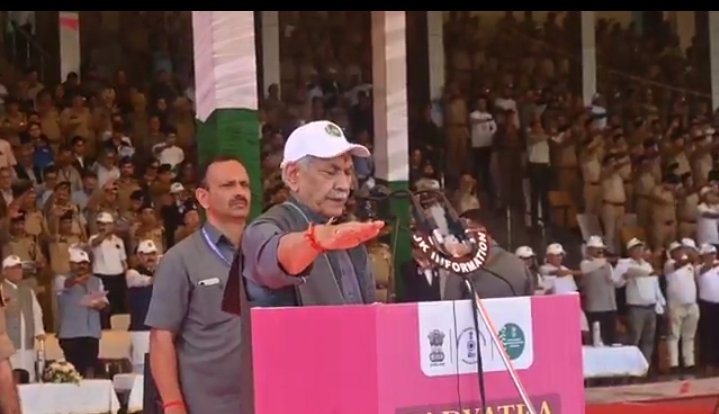
Asserting zero tolerance against narcotic smugglers, LG Shri. Manoj Sinha taking to the streets with a Nasha Mukt Padyatra underscores one stark reality that the drug menace in Jammu & Kashmir UT has reached alarming proportions. Yet, the optics of urgency only underline a harsher truth: the system is still struggling to deliver results where it matters most. The numbers tell a story the official narrative often avoids. NDPS cases have surged sharply — from nearly 1,200 in 2020 to over 1,800 annually in recent years. Arrests run into thousands. With much pomp and show, seizures worth crores are routinely showcased. Ironically, the conviction rate remains stuck at a dismal 40–41 percent. In any serious anti-narcotics regime, this figure alone would be treated as a red flag. Here, it is quietly glossed over.
A low conviction rate is not merely a statistic; it is evidence of weak investigations, poor evidence-building, and lack of sustained prosecution. Even more troubling is the widening gap between enforcement claims and ground reality. With an estimated 10–13 lakh drug users in our UT, the crisis has reached near-epidemic levels. The worst affected are the youth — a generation steadily slipping into addiction while the system counts seizures. In Jammu, the Miran Sahib–RS Pura–Bishnah belt, along with Samba and Kathua, has become a thriving corridor for narcotics inflow and distribution. Equally concerning is the vast, well-entrenched network of drug peddlers operating with ease in areas such as Ragoora, Bahu Fort, and Rajiv Nagar, falling under the jurisdictions of Bagh-e-Bahu and Trikuta Nagar police stations. The menace has reportedly spread its tentacles to the Jagti belt of Nagrota, where late-night activity reflects a disturbing pattern of drug consumption. In Kashmir, Srinagar, Anantnag, Pulwama, and Baramulla remain entrenched hotspots. The pace at which addiction and distribution points are multiplying is alarming — indicating that banned substances are not just available, but easily accessible.
This situation has fuelled public anger. There is a growing perception — increasingly backed by patterns — that enforcement agencies are quick to celebrate small recoveries and parade minor arrests, but have miserably failed to dismantle the deeply entrenched networks of kingpins operating from behind the curtain. The so-called “big fish” are either rarely touched or cases against them fail to reach logical conclusions. This raises uncomfortable questions: How do such networks continue to operate with such ease? Why does the supply chain remain intact despite repeated crackdowns? And most importantly, where does accountability lie?
If the war on drugs is to be taken seriously, accountability must begin at the police station level. Every Station House Officer (SHO) must be made directly answerable for drug activity within his jurisdiction. Performance cannot be measured merely by FIRs registered or petty recoveries made, but by whether drug availability has actually declined and networks have been dismantled. The fight against narcotics cannot be won through optics, slogans, or periodic drives. It requires relentless, intelligence-driven operations, financial tracking of syndicates, strong prosecution, and zero tolerance for internal lapses. More importantly, police stations must move beyond symbolic police-public meetings — often attended by a select few — and build genuine community trust, where responsible citizens become the eyes and ears of policing.
With Padyatra, the message from the top is loud. But unless it is matched by uncompromising accountability on the ground, the reality will remain unchanged- small players will be caught, big operators will thrive, and the drug menace will continue to hollow out the future of Jammu & Kashmir.