
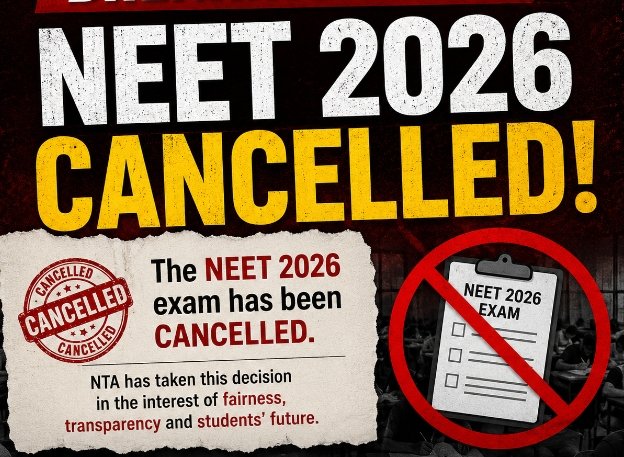
The cancellation of NEET-UG 2026 over allegations of paper leakage has once again exposed the fragile credibility of India’s competitive examination system. For lakhs of students who spend years preparing for one of the country’s toughest entrance examinations, such controversies are more than administrative failures and thus raises suspicion on trust, merit, and fairness. The centralized examination NEET was introduced to create uniformity and fairness in medical admissions, but repeated leakage controversies are steadily turning a reform-oriented examination into a symbol of anxiety and distrust.
As a matter of fact, since it’s inception the National Eligibility cum Entrance Test has repeatedly found itself surrounded by controversies. Initially challenged over issues relating to language, syllabus disparity, and the role of coaching institutions, NEET gradually evolved into a centralized gateway for medical admissions. However, instead of becoming a symbol of transparency and uniformity, the examination has frequently been marred by allegations of irregularities, litigation, impersonation rackets, and paper leak controversies. The latest cancellation is particularly alarming because it comes despite repeated assurances of tighter security after previous controversies. Over the years, authorities have promised reforms, technological safeguards, and stricter monitoring mechanisms. Yet, each fresh scandal exposes how vulnerable the system remains to organized malpractice and alleged administrative lapses.
The damage caused by such incidents cannot be measured merely in terms of delayed examinations or revised schedules. Behind every cancellation lies the emotional distress of students who endure relentless academic pressure, financial burdens, and psychological uncertainty. Honest aspirants begin questioning whether hard work alone is sufficient in a system repeatedly tainted by allegations of manipulation. Equally worrying is the growing normalization of examination scandals in India. Whether recruitment tests or entrance examinations, paper leaks are increasingly becoming recurring headlines. This trend reflects not only security failures but also the rise of organized exam mafias operating through sophisticated networks.
India urgently needs structural reforms in examination governance. Stronger digital security, encrypted question paper systems, strict accountability of officials, and swift punishment for offenders are essential. More importantly, institutions conducting national examinations must understand that credibility, once repeatedly damaged, becomes extremely difficult to restore. For a nation where competitive examinations shape the future of millions, safeguarding their integrity is not optional rather it is imperative.