
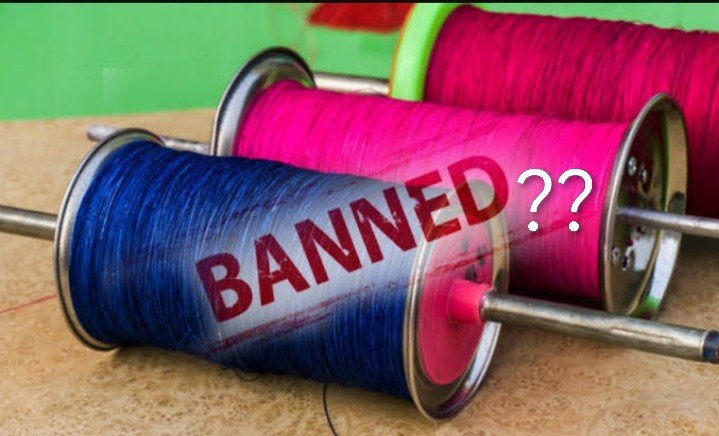
Tragic death of Naib Subedar (Retd) Lakhvinder Singh on Bishnah Ring Road is a chilling reminder that the menace of banned Chinese manja is no longer merely an environmental or festive-season concern. The menace is a direct threat to human life. Having survived years of military service, the R.S. Pura resident lost his life to a deadly synthetic string while returning home from his security job. Imagine the pangs he has gone through while on way to Hospital where he was declared brought dead. His death came amid a disturbing pattern of manja-related injuries, with Government Medical College Hospital alone reportedly receiving more than three dozen victims with severe cuts around Rakshabandhan. The tragedy raises a fundamental question: if a banned product continues to circulate openly despite repeated prohibitory orders, what exactly is preventing its supply and sale?
The Jammu administration has prohibited the manufacture, stocking, sale, supply and use of plastic/nylon manja under Section 163 of the Bharatiya Nagarik Suraksha Sanhita (BNSS), while violations are being dealt with under Section 223 of the Bharatiya Nyaya Sanhita (BNS). Section 223(a) provides imprisonment up to six months, or a fine up to ₹2,500, or both; where disobedience causes or tends to cause danger to human life, health or safety, Section 223(b) provides imprisonment up to one year, or a fine up to ₹5,000, or both. For a banned string capable of causing grievous injuries and fatalities, the adequacy of this deterrent inevitably deserves public scrutiny. The issue is not whether violators should be booked, but whether the consequences are strong enough to make distributors, sellers and buyers think twice before treating human safety as a price of festive commerce.
What Jammu needs is enforcement that goes beyond periodic seizures staged after tragedy strikes. Authorities must trace the chain from source and distributor to retailer and buyer, identify repeat offenders, monitor markets throughout the year and ensure that proven violations result in meaningful prosecution. Equally important is accountability for enforcement lapses wherever established. A prohibitory order cannot become effective merely because it is issued; its credibility rests on the certainty of detection and consequences. When a banned commodity capable of severing a throat can still reach the hands of the public, the administration must answer why existing safeguards are failing. The death of a retired soldier should not become another seasonal statistic. Precisely, it should be the point at which Jammu decides that banned Chinese manja will no longer be allowed to turn a festival into a death trap.