
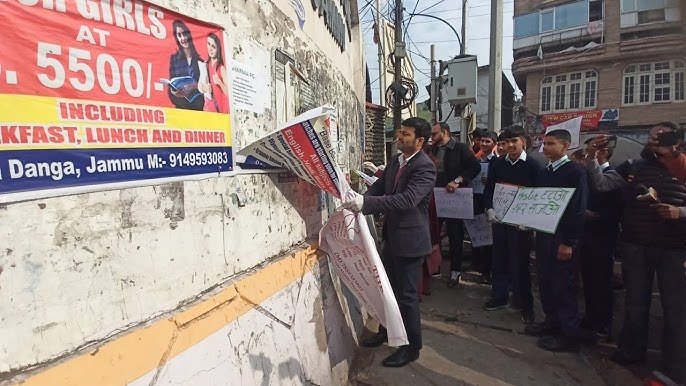
The Swachh Republic Day cleanliness drive, a 20-day extensive campaign launched by the Jammu Municipal Corporation (JMC), marks a timely and visible intervention in the city’s burgeoning struggle with sanitation, encroachment, and civic discipline. Anchored around the ideals of Republic Day, the campaign sought to reinforce the constitutional duty of citizens and authorities alike to safeguard public spaces and uphold civic order. During the drive, JMC teams intensified sanitation operations across major markets, arterial roads, and residential clusters. Special emphasis was laid on removing unauthorized encroachments on footpaths, roadsides, and drains—longstanding impediments to pedestrian safety, traffic flow, and urban hygiene. The clearing of illegal extensions, temporary structures, and roadside clutter sent a clear signal that public land cannot be treated as private property by default.
Equally important was the civic body’s focus on public awareness. The campaign gained further strength with Commissioner Secretary, Housing and Urban Development, Ms. Mandeep Kour, and JMC Commissioner, Dr. Devansh Yadav, personally visiting key areas for on-ground assessment. Through door-to-door outreach, street interactions and public announcements, citizens were urged to avoid littering, segregate waste at source, and cooperate with sanitation workers. The message was unambiguous: cleanliness is not a one-time campaign but a shared, everyday responsibility. The drive also sought to foster respect for sanitation staff, whose work often goes unnoticed despite being central to the city’s functioning.
However, while the initiative deserves appreciation for its scale and intent, the challenge lies in sustaining momentum once the campaign banners are taken down. Cleanliness drives in Jammu, as elsewhere, are often vigorous at launch but uneven in long-term follow-through. Encroachments, in particular, have a habit of resurfacing once enforcement relaxes, raising questions about deterrence and accountability. It is also hard to ignore that several chronically neglected localities—though situated in the heart of the city—have long received stepmotherly treatment in terms of civic development. Areas like Qasim Nagar and Gorkha Nagar in the Bahu Fort vicinity, along with several peripheral wards and low-visibility pockets, received little attention from senior officials during the drive, diluting the message of uniform enforcement.
For the Swachh Republic Day drive to leave a lasting imprint, JMC must institutionalize its gains through regular monitoring, ward-level accountability, and citizen feedback mechanisms. Clean streets, encroachment-free public spaces, and civic discipline cannot remain symbolic gestures tied to national occasions; they must become the everyday reality of Jammu’s urban governance. Only then, the spirit of the Republic truly reflect on the city’s streets. Least but not last- the drive achieved much in Jammu, yet sustained efforts and civic participation are essential to fully clean the city.